
Viatical vs. Life Settlements: Which One Is Right for Your Health Situation?

Navigating the Path to Policy Liquidity
When a life insurance policy is no longer needed or becomes too expensive to maintain, selling it on the secondary market is a powerful way to reclaim its value. However, the path you take—either a life settlement or a viatical settlement—depends almost entirely on the health status of the insured. While both processes involve selling a policy to a third party for a lump sum of cash, understanding the legal, financial, and tax distinctions between the two is essential for making an informed decision.

Defining the Life Settlement
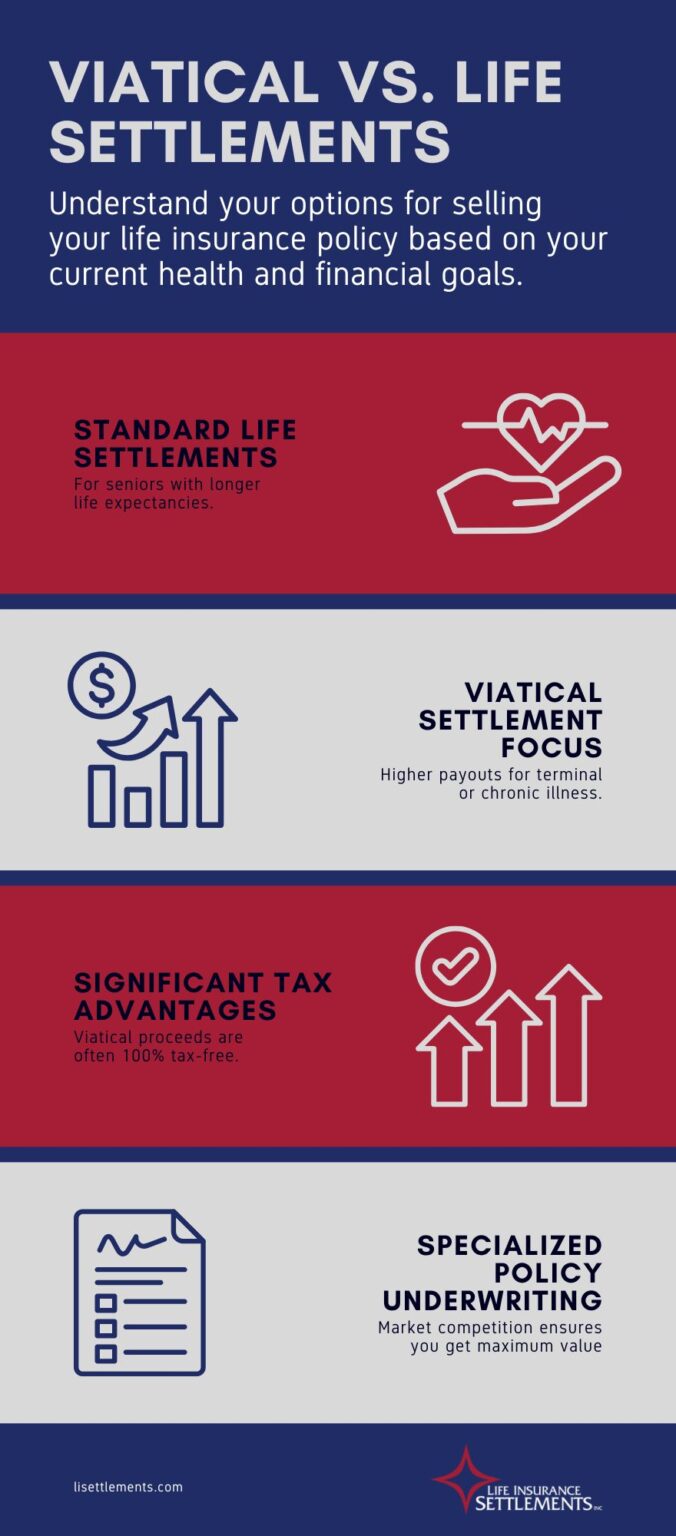
A life settlement is generally designed for seniors, typically age 65 or older, who have had a change in their financial needs or health since the policy was issued. In this scenario, the insured usually has a life expectancy ranging from 2 to 15 years. The proceeds from a life settlement are typically used to fund retirement, pay for long-term care, or eliminate expensive premium payments.

The Viatical Settlement Distinction
A viatical settlement occurs when the insured is “terminally” or “chronically” ill. Legally, this usually means a physician has certified a life expectancy of 24 months or less. Because the life expectancy is shorter, viatical settlements typically command a much higher percentage of the death benefit than a standard life settlement. This provides immediate liquidity to cover medical bills or enhance the quality of life during a difficult time.

Crucial Tax Implications
One of the most significant differences lies in how the IRS treats the proceeds. Under the Health Insurance Portability and Accountability Act (HIPAA), proceeds from a viatical settlement are often 100% federally tax-free for the seller. In contrast, life settlement proceeds may be subject to capital gains or ordinary income tax on the portion that exceeds the “basis” (the total premiums paid). Always consult a tax professional to understand your specific liability.

Qualifications and Underwriting
The underwriting process for both involves a thorough review of medical records and policy illustrations. For a life settlement, the focus is often on age and moderate health impairments. For a viatical, the focus is on the specific severity of a diagnosis. In both cases, working with a broker like LIS ensures that your medical privacy is protected while we shop the policy to multiple providers to find the highest offer.
Secure Your Future with Expert Guidance
Deciding between a life or viatical settlement is a significant financial move that requires expert advocacy. At Life Insurance Settlements, Inc., we represent you, the policy owner, to ensure you receive the maximum value based on your unique health situation. Reach out to our experienced team today for a confidential, no-obligation consultation to discover what your policy is truly worth.